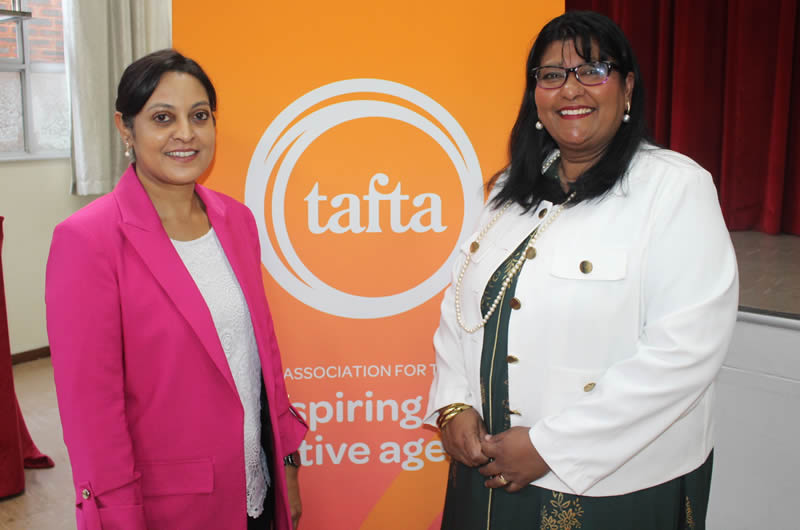
Nita Sewpersad (CFO) and Femada Shamam (CEO) pictured at our recent AGM.
Tafta calls for systems that keep pace with longer lives this International Day of Older Persons
As the world marks International Day of Older Persons on 1 October, The Association for the Aged is calling for a rethink of the systems, services and environments that shape older people’s lives, so that longer lives can be lived with dignity, security, choice and meaningful participation.
The 2026 theme, ‘The Age of Longevity: Rethinking Systems for Longer Lives,’ places focus on adapting health, social protection and long-term care systems to changing demographics, while strengthening financial security, inclusive labour markets, lifelong learning and environments that support health and dignity throughout the ageing journey.
Tafta CEO Femada Shamam said increased longevity should be celebrated, but living longer should not mean having fewer choices or opportunities.
Living longer should not mean having fewer choices or opportunities
“Age should never be an assumption about what a person can do, contribute, learn or decide,” she said.
“Older people have the right to participate in decisions that affect their lives and to have their voices heard. We must ask what those additional years will look like and whether people will have access to the financial security, healthcare, appropriate housing, support networks and opportunities they need to continue living meaningful and independent lives.
“Preparing for an ageing population cannot rest with the elder care sector alone. It requires government, business, communities, families and individuals to recognise that ageing is a shared responsibility.”
The challenge extends beyond the provision of care. Age-based assumptions can influence access to employment, training, healthcare, financial services, digital platforms and other areas of everyday life. As people live longer, we believe these systems need to recognise older people as participants, decision-makers and contributors – rather than viewing older age primarily through the lens of dependency or support.
Financial security
Financial security is particularly significant in South Africa, where many older people rely heavily – and in some instances solely – on the SASSA Older Person’s Grant to meet everyday needs. As people live longer, essential costs such as housing, food, utilities, transport and healthcare must be sustained over a longer period.
Tafta Chief Financial Officer Nita Sewpersad said financial preparedness for longevity needs to begin well before older age.
“We need to encourage financial literacy, saving and long-term planning throughout life, while acknowledging that many South Africans reach older age without adequate retirement provision,” she said.
“Financial security cannot only be about how much an individual has managed to save. We must also consider whether our social protection systems and services are equipped to support people as they live longer, particularly those with limited financial means.”
“Older people are not a homogenous group, and there is no single experience of ageing,” said Shamam. “Older people remain employees, entrepreneurs, volunteers, caregivers, mentors and community leaders. We need workplaces and communities that recognise their experience and create opportunities for continued participation.”
Priorities reinforced
These priorities were reinforced in reports presented at Tafta’s Annual General Meeting on 22 September 2026, reflecting our continued investment in active ageing, ageing in place, community-based support, workforce development, research, innovation and enabling environments.
Tafta is also supporting the broader international conversation around ageism and the rights of older people as part of this year’s International Day of Older Persons.
The global #OldEnoughTo campaign challenges assumptions about what people are considered “too old” to do and encourages greater recognition of older people’s agency, choices and contributions.
“International Day of Older Persons gives us an opportunity to celebrate the older people who have shaped our families, communities and country – but this year’s theme asks us to go further,” concluded Shamam.
“The systems we strengthen today are the systems every generation may one day depend upon. If we are fortunate enough to live longer, we must ensure those additional years can be lived with security, good health, purpose, choice and belonging.”